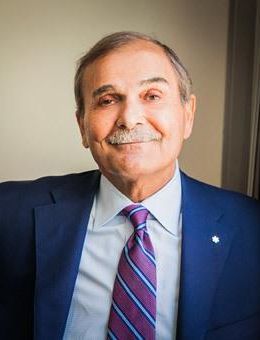

Bora Laskin Award
The award has been established by the University of Toronto to honour individuals who have made outstanding contributions to Canadian labour law. The award is named after the late Chief Justice Bora Laskin (1912–1984) who, before joining the Supreme Court of Canada, was pre-eminent as a labour law scholar and labour arbitrator. Nominees are considered from all fields relating to labour law and labour relations, including, for example, academia, private practice, courts, tribunals, and arbitration.
Announcing the Recipient of the 2026 Bora Laskin Award presented by University of Toronto
Gregor Murray, a professor in the School of Industrial Relations at the University of Montreal, is unique in combining the role of a prolific and innovative scholar with that of co-founder and director over two decades of CRIMT, a multidisciplinary team of more than 180 researchers in twelve countries who engage in institutional experimentation in matters affecting labour law and the future of work.
In his 2019 memoir, “Connecting the Dots,” Canada’s premier labour law academic, Harry Arthurs (first recipient of the Bora Laskin award), has described Gregor as an “organizing genius”:
“My most sustained and intense interdisciplinary collaboration, as it turns out, arrived towards the very end of my academic career. I was first an advisor to, and then an active participant in, a remarkable international, interdisciplinary consortium called CRIMT – Centre de Recherche Interuniversitaire sur la Mondialisation et le Travail. Its organizing genius, Gregor Murray from the Université de Montréal, has accomplished one of the most difficult feats imaginable: he has enabled scores of individualistic researchers and practitioners speaking different languages, in different disciplinary and ideological vernaculars, from different countries and continents, to engage in a fifteen-year-long conversation that has left us all not only wiser but wanting more.”
In the field of ballet, Sergei Diaghilev earned worldwide fame as a consummate impresario who brought together dancers, composers, choreographers and many others to create the internationally celebrated Ballets Russes. Gregor Murray, with his organizational prowess, has established himself as the Diaghilev of Canadian labour law and industrial relations.
Although he has written many influential books and articles, none is more important to the understanding of our field than the “Canadian Common Model of Labour Law”, co-authored with Professor Gilles Trudeau, which attributes to our decentralized Canadian form of federalism the brisk pace of experimentation in labour law and policy that distinguishes Canada from the United States.
Astoundingly, Professor Murray has never taken a course in labour law. He did, however, benefit from intensive tutoring by his then colleague at Laval University, the legendary Pierre Verge (second recipient of the Bora Laskin award) when they wrote two books on unions and the future of labour law.
Gregor has participated in and led multiple cooperation and research projects in both China and Vietnam. He met his lifelong partner, Huyen Chau Nguyen, in 1977 in a bicycle shop in Beijing when they were both exchange students studying Chinese language and history. They later married in the United Kingdom where they were both students at Warwick University and have two children, Simon and Maï, who were born in Montreal and Quebec City respectively.
Gregor is a member of the Royal Society of Canada, has served as president of the Canadian Industrial Relations Association and editor of Relations industrielles/Industrial Relations, and is the recipient of various awards including the Gérard Dion Award of the Canadian Industrial Relations Association.
Jeffrey Sack, K.C.
Secretary
Bora Laskin Award Selection Committee
..
Annonce du lauréat du prix Bora Laskin 2026
présenté par l’Université de Toronto
Gregor Murray, professeur à l’École de relations industrielles de l’Université de Montréal, se distingue par son double rôle de chercheur prolifique et novateur et de cofondateur et directeur, depuis deux décennies, du CRIMT (Centre de recherche interuniversitaire sur la mondialisation et le travail), une équipe multidisciplinaire de plus de 180 chercheurs répartis dans douze pays qui se consacrent à l’expérimentation institutionnelle en matière de droit du travail et d’avenir du travail.
Dans ses mémoires de 2019, « Connecting the Dots », le plus grand universitaire canadien en droit du travail, Harry Arthurs (premier lauréat du prix Bora Laskin), décrit Gregor comme un « génie de l’organisation » :
« Ma collaboration interdisciplinaire la plus soutenue et la plus intense est arrivée, comme il se trouve, tout à la fin de ma carrière universitaire. J’ai d’abord été conseiller, puis participant actif, d’un remarquable consortium international et interdisciplinaire appelé CRIMT – Centre de Recherche Interuniversitaire sur la Mondialisation et le Travail. Son organisateur de génie, Gregor Murray de l’Université de Montréal, a accompli l’un des exploits les plus difficiles qui soient : il a permis à des dizaines de chercheurs, parlant des langues différentes, avec des jargons disciplinaires et idéologiques différents, venus de différents pays et continents, de s’engager dans une conversation de quinze ans qui nous a tous laissés non seulement plus sages, mais aussi désireux d’en savoir plus. »
Dans le domaine du ballet, Sergei Diaghilev s’est fait connaître mondialement comme un imprésario accompli, capable de réunir danseurs, compositeurs, chorégraphes et bien d’autres pour créer les Ballets russes, une compagnie saluée dans le monde entier. Gregor Murray, par son talent d’organisateur, s’est imposé comme le Diaghilev du droit du travail et des relations industrielles au Canada.
Bien qu’il ait écrit de nombreux ouvrages et articles influents, aucun n’est plus important pour la compréhension de notre domaine que « Canadian Common Model of Labour Law », coécrit avec le professeur Gilles Trudeau, selon lequel c’est la nature décentralisée du fédéralisme canadien qui explique le rythme rapide d’expérimentation en droit et en politique du travail — une caractéristique qui distingue le Canada des États-Unis.
Fait étonnant, le professeur Murray n’a jamais suivi de cours de droit du travail. Il a plutôt bénéficié du soutien étroit de son collègue de l’époque à l’Université Laval, le légendaire Pierre Verge (deuxième lauréat du prix Bora Laskin), lors de la rédaction de deux ouvrages sur les syndicats et l’avenir du droit du travail.
Gregor a participé à de nombreux projets de coopération et de recherche en Chine et au Vietnam, et en a dirigé plusieurs. Il a rencontré sa compagne de toujours, Huyen Chau Nguyen, en 1977 dans un magasin de vélos à Pékin, alors qu’ils participaient tous deux à un échange universitaire, où ils étudiaient la langue et l’histoire chinoises. Ils se sont mariés plus tard au Royaume-Uni, où ils étaient tous deux étudiants à l’Université de Warwick, et ont deux enfants, Simon et Maï, nés respectivement à Montréal et à Québec.
Gregor est membre de la Société royale du Canada, il a été président de l’Association canadienne des relations industrielles et rédacteur en chef de la revue Relations industrielles/Industrial Relations, et a reçu plusieurs distinctions, dont le prix Gérard-Dion de l’Association canadienne des relations industrielles.
Jeffrey Sack, c.r.
Secrétaire
Comité de sélection du prix Bora Laskin
The award will be presented on December 2, 2026 at a ceremony in Toronto.
Location:
The Music Room, Hart House, University of Toronto
7 Hart House Circle
Toronto, ON M5S 3H3
Event Schedule:
5:00 – 6:00 pm – Cocktail Reception
6:00 – 9:00 pm – Dinner and award presentation
For more information or to reserve a place, please email customerservice@lancasterhouse.com.
Pricing
Bora Laskin Registration
The Award Committee
Chair
Professor Rafael Gomez, Professor and Director, Centre for Industrial Relations and Human Resources, University of Toronto
Members
Chris Albertyn, Albertyn Arbitration, Toronto
Ginette Brazeau, Mediator/Arbitrator and former Chair, Canada Industrial Relations Board
Justice Emily Burke, Supreme Court of British Columbia
Brian Burkett, Fasken LLP, Toronto
Professor Renée-Claude Drouin, Faculté de droit, Université de Montréal
Professor Kerry Rittich, Faculty of Law, University of Toronto
Tom Roper, Roper Greyell LLP, Vancouver
Rebecca Saturley, KC, Stewart McKelvey, Halifax
Professor Daphne Taras, Ted Rogers School of Management, Toronto Metropolitan University
The Honourable Warren K. Winkler, former Chief Justice of Ontario
The Right Honourable Bora Laskin, P.C., C.C.
Bora Laskin was born in Fort William (Thunder Bay), Ontario, on October 5, 1912. He was the son of Max Laskin and Bluma Zingel. After graduating with a B.A. from the University of Toronto in 1933, he enrolled at Osgoode Hall Law School. From 1933 to 1936, he served his articles and continued to study at the University of Toronto, earning an M.A. in 1935 and an LL.B. in 1936.
The following year, he received an LL.M. from Harvard Law School. Upon his return to Toronto that year, he was called to the bar and began his legal career writing headnotes for The Canadian Abridgement. In 1940 he embarked on a teaching career that spanned 25 years, mostly at the University of Toronto except for four years at Osgoode Hall (1945-49). He was the author of many legal texts, including Canadian Constitutional Law, and was associate editor of Dominion Law Reports and Canadian Criminal Cases for 23 years.
He was appointed to the Ontario Court of Appeal in 1965 and to the Supreme Court of Canada on March 19, 1970. On December 27, 1973, he was named Chief Justice of Canada. He served on the Supreme Court for 14 years.
Chief Justice Laskin died on March 26, 1984, at the age of 71.
Previous Bora Laskin Award Recipients
2025

2025
Adelle Blackett
Adelle Blackett
2024
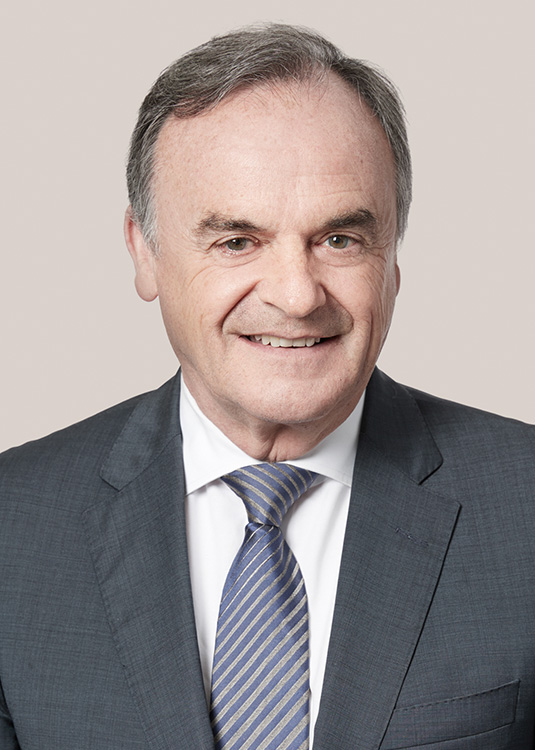
2024
Brian Burkett
Brian Burkett
2024
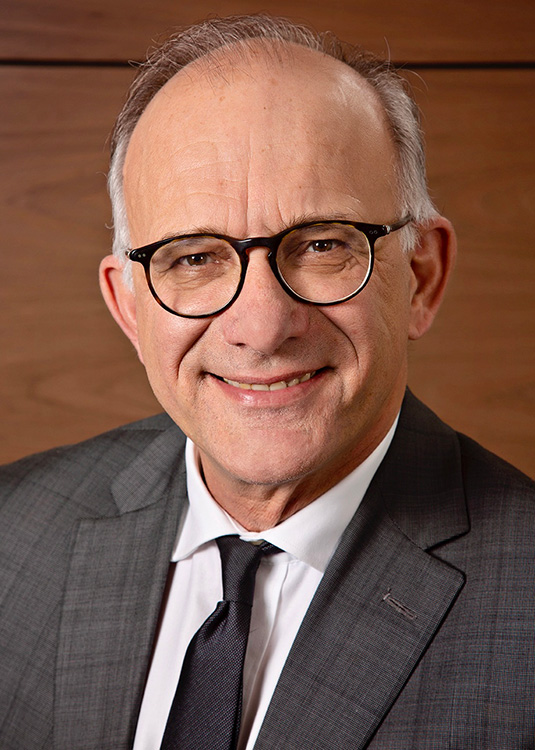
2024
Rick Engel, KC
Rick Engel, KC
2023
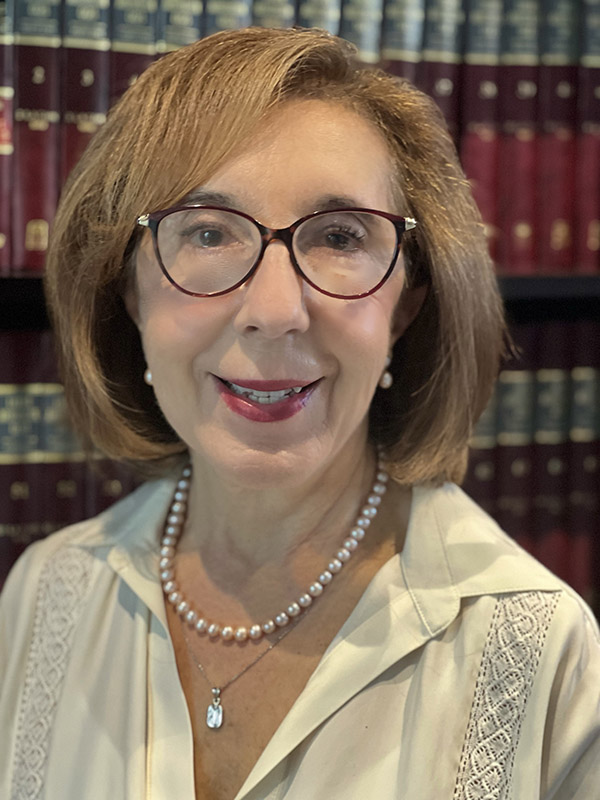
2023
Paula Knopf
Paula Knopf
2022
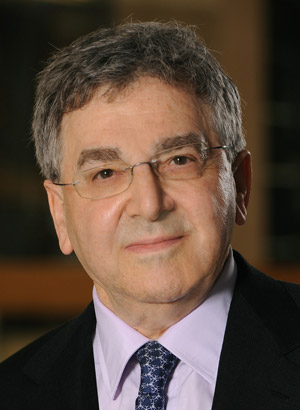
2022
Jeffrey Sack
Jeffrey Sack
2022
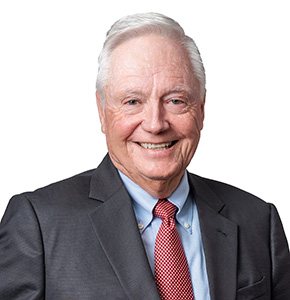
2022
Thomas Roper
Thomas Roper
2019
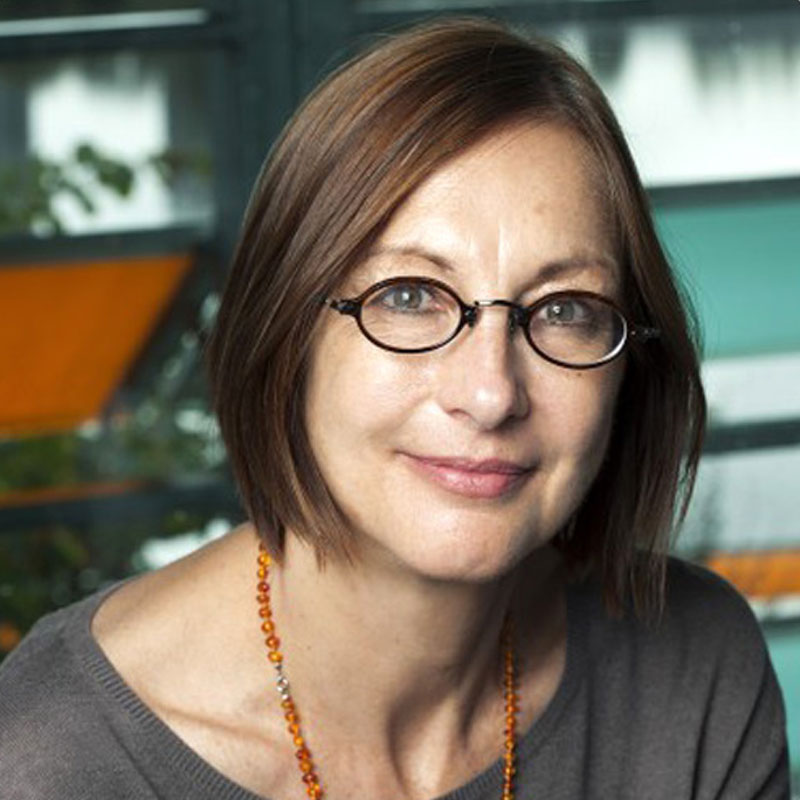
2019
Judy Fudge
Judy Fudge
2018